
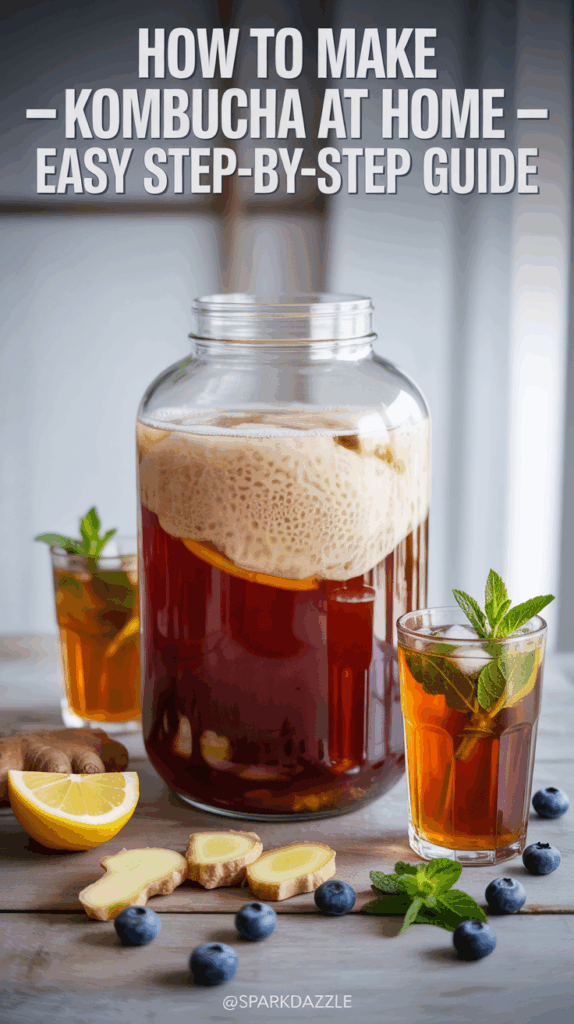

The History, Science & Secrets of Kombucha: What You Need to Know Before Brewing at Home
Kombucha may sound exotic, but this sweet–tart, sparkling fermented tea has been around for thousands of years. Though many assume the name comes from the Japanese words kombu (kelp) and cha (tea), most historians agree kombucha originated in Manchuria, China around 220 BCE.
Legend says a Korean doctor named Kombu brought it to Japan in 414 CE to help soothe Emperor Ingyo’s digestive issues — and the rest is history. Since then, this “mushroom tea” has gone through waves of popularity worldwide, eventually becoming one of today’s most beloved wellness drinks in North America.
Despite the big health claims you may hear (no, it doesn’t cure cancer), kombucha does offer real benefits — and best of all, it’s incredibly simple to brew at home.
🍵 How Kombucha Works
Kombucha is made from:
- Tea
- Sugar
- Water
- A SCOBY (a Symbiotic Culture of Bacteria and Yeast)
You Can But All these Ingredients HERE
The SCOBY looks like a rubbery, jelly-like pancake, and it’s packed with microscopic bacteria and yeast that ferment the sweet tea. The yeast breaks down sugar into alcohol, and the bacteria convert that alcohol into healthy organic acids — giving kombucha its signature tang and fizz.
🧪 What’s Inside a SCOBY?
A SCOBY contains a variety of friendly bacteria and yeasts, including:
Common bacteria
- Acetobacter xylinum
- A. aceti
- A. pasteurianus
- Gluconacetobacter kombuchae
These bacteria help form the SCOBY’s cellulose structure and produce organic acids.
Common yeasts
- Saccharomyces
- Candida
- Brettanomyces
- Pichia
The yeast consumes the sugar and produces ethanol, which the bacteria then convert into acids like acetic and gluconic acid. As the acids increase, the pH drops, creating that sour, fizzy kombucha flavor we love.
🍶 How Long Does Fermentation Take?
- After 7 days: about 65% of the sugar is fermented
- After 21 days: about 80% is fermented
Your kombucha may taste:
- Sweet (short fermentation)
- Balanced (medium fermentation)
- Tart/Vinegary (long fermentation)
Most people enjoy kombucha after 7–10 days, but you can customize the flavor to your taste.
🍷 Does Kombucha Contain Alcohol?
Yes — but usually very small amounts.
Alcohol peaks around day 6 of fermentation and then decreases as bacteria convert it into acids.
While kombucha isn’t usually alcoholic, you shouldn’t assume it’s 0.0%. Be cautious with kids or anyone avoiding alcohol completely.
🍃 Choosing Your Tea & Sugar
You can brew kombucha with most teas, but these work best:
Best teas:
- Black tea (most nutrients for fermentation)
- Green tea
- Oolong tea
Avoid herbal teas — many don’t ferment properly.
Sugars you can use:
- White sugar (best choice)
- Cane sugar
- Fruit juice
- Raw honey (used for Jun kombucha)
Each tea and sugar combination will change the flavor and fermentation speed. Black tea usually produces the most balanced and consistent kombucha.
⚠️ Important Precautions for Safe Kombucha Brewing
1. Prevent cross-contamination
Keep your kombucha tools separate from any homebrewing equipment.
Kombucha bacteria can contaminate beer/wine making gear.
2. Keep bugs out
Use:
- a wide-mouth jar
- a breathable cover (coffee filter, cheesecloth, or tea towel)
- a rubber band
Fruit flies LOVE kombucha — don’t give them access.
3. Control the temperature
Kombucha thrives at 70–80°F (21–27°C).
Too cold → fermentation slows or stops
Too hot → risk of mold
4. pH matters
Start your batch with a pH of 4.5 or below.
This prevents harmful microbes from growing.
Use a pH meter or test strips to confirm.
If pH is too high, add a splash of distilled white vinegar.
If you see mold?
Throw out the entire batch (including the SCOBY).
Clean everything thoroughly and start over.
🌱 Choosing the Right SCOBY
You have two options:
1. Live (fresh) SCOBY
Pros:
- Ready immediately
- Strong, healthy fermentation
- Comes with starter liquid
Cons: - Needs refrigeration
- Shorter shelf life
2. Dehydrated SCOBY
Pros:
- Long shelf life
- Easy to store
Cons: - Requires 2–4 weeks of rehydration
- Slow start for the first batch
Fresh SCOBYs generally produce better kombucha faster.
🍾 Bottling Kombucha Safely
Kombucha continues to ferment in the bottle.
That means pressure builds — and yes, bottles can explode.
Best bottles to use:
✔️ PET plastic bottles (safest)
✔️ Sparkling water bottles you’ve already emptied
They can handle pressure and you can squeeze them to check carbonation.
When the bottle feels firm, refrigerate to slow fermentation and enjoy.
🫖 Basic Kombucha Recipe (Simplified)
Batch size: 1 gallon
Ingredients
- 1 SCOBY
- 1 cup sugar
- 8 tea bags (or 20 g loose tea)
- 1 gallon filtered water
- 1–2 cups starter kombucha
- Optional: fruit, herbs, flavorings
Instructions
- Boil water and steep tea for 1–5 minutes.
- Remove tea and stir in sugar until dissolved.
- Allow sweet tea to cool to 70–80°F.
- Add tea to a clean jar with the SCOBY and starter tea.
- Check pH — it should be below 4.5.
- Cover with cloth and secure.
- Ferment 7 days at warm room temperature.
- Taste. If you like it, bottle it. If it’s too sweet, ferment longer.
- Bottle and keep in a warm place 3–7 days until carbonated.
- Refrigerate and enjoy cold.
SHOP THE POST